
- Technology
Future Technologies That Will Change the World
Wondering which Future Technologies are set to redefine the way we live, work, and connect? Discover how breakthroughs in artificial intelligence, clean energy, biotechnology, quantum computing, and robotics are reshaping industries and influencing everyday life in ways that are closer than you think.
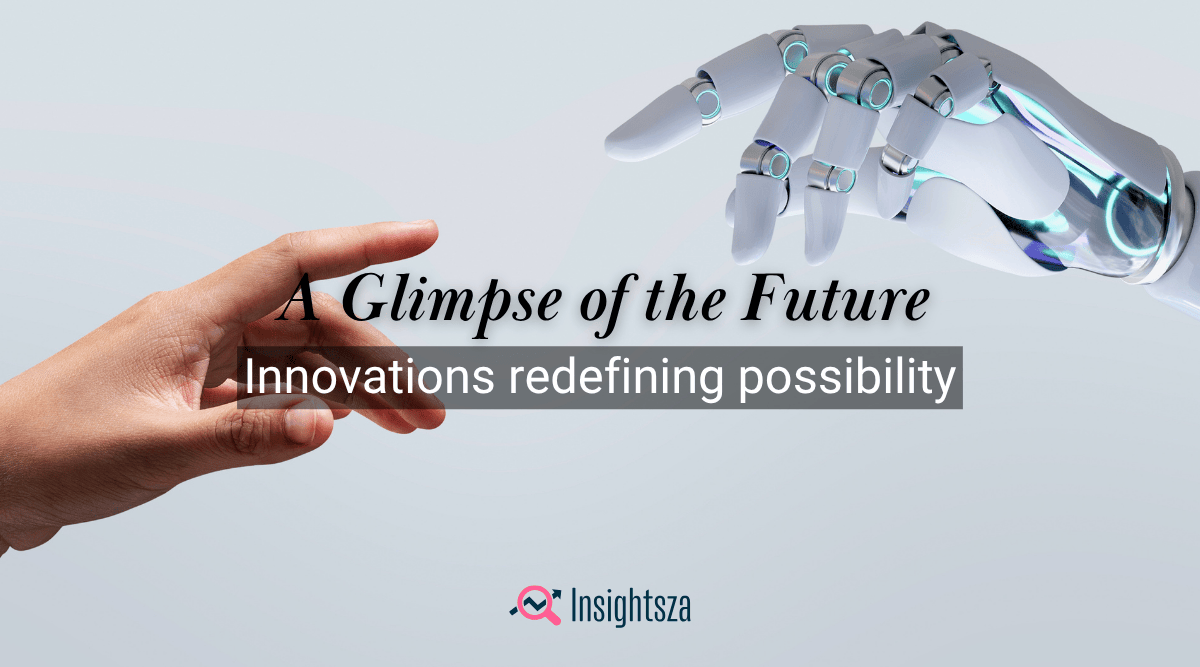
If the last few years have felt fast, you are not imagining it.
Artificial intelligence writes code. Cars can drive themselves in real traffic. Scientists are editing genes with increasing precision. Entire industries are being reshaped by automation and clean energy.
The truth is, we are not waiting for the future anymore. We are living in the early stages of it.
But which Future Technologies are actually going to change the world in meaningful ways? Not hype. Not science fiction. Real technologies that are already developing and quietly transforming how we live, work, and connect.
Let’s break it down in a clear, grounded way.
1. Artificial Intelligence That Thinks, Creates, and Decides

Artificial Intelligence is no longer limited to chatbots and recommendation engines.
AI systems are now being used in:
- Healthcare diagnostics
- Drug discovery
- Financial forecasting
- Autonomous robotics
- Customer service automation
- Software development
Generative AI tools can create high-quality text, images, video, and even software code with minimal human input. More importantly, AI copilots are being embedded directly into workplace platforms, helping professionals draft documents, analyze data, automate workflows, and make better decisions faster.
Why This Matters
AI is shifting from being a tool you manually operate to a system that collaborates with you.
Businesses are restructuring workflows around AI-assisted productivity. Individuals are accomplishing more in less time. Entire job categories are evolving as automation handles repetitive tasks while humans focus on strategy, creativity, and oversight.
The transformation is not theoretical. It is already happening across industries.
2. Quantum Computing Moving Toward Practical Use

Quantum computing has moved beyond theory and into experimental and early commercial stages.
Technology leaders and research institutions are:
- Increasing qubit stability
- Reducing computational error rates
- Developing hybrid quantum-classical systems
- Advancing quantum encryption methods
While fully scalable quantum systems are still under development, early quantum machines are being tested for complex simulations in materials science, logistics optimization, and advanced cryptography.
Why This Matters
Quantum computing could solve problems that traditional computers would take thousands of years to process.
This includes:
- Climate modeling
- New battery chemistry development
- Pharmaceutical molecule simulation
- Large-scale optimization for supply chains
If successfully scaled, quantum systems could dramatically accelerate scientific discovery.
3. Biotechnology and Precision Gene Editing

Gene editing technologies such as CRISPR have become more precise and targeted.
Researchers are advancing:
- Gene therapies for inherited conditions
- Targeted cancer treatments
- Personalized medicine based on genetic data
- mRNA-based therapeutic platforms
Healthcare is increasingly becoming data-driven and individualized, using genetic information to tailor prevention and treatment strategies.
Why This Matters
Medicine is gradually shifting from reactive treatment toward early detection and prevention.
Instead of addressing illness after it progresses, emerging biotech solutions aim to intervene at the molecular level. Ethical oversight remains essential, but the scientific progress is significant and accelerating.
4. Clean Energy Breakthroughs and Energy Storage

Energy technology is one of the most critical Future Technologies shaping global stability.
There has been a rapid expansion in:
- Solar and wind energy capacity
- Green hydrogen development
- Solid-state battery research
- Nuclear fusion experimentation
- Carbon capture technologies
Battery storage systems are improving in efficiency and affordability, making renewable energy more reliable for national power grids.
Why This Matters
Energy independence, economic resilience, and environmental sustainability are directly connected to innovation in clean energy.
Improved storage allows renewable power systems to operate consistently even when environmental conditions fluctuate.
The shift toward cleaner energy is not only environmental. It is economic and geopolitical.
5. Autonomous Transportation and Intelligent Robotics

Self-driving systems and robotics are advancing steadily.
Developments include:
- Autonomous delivery vehicles
- AI-powered warehouse automation
- Semi-autonomous freight transport
- Drone-based logistics systems
Robotics combined with machine learning is increasing manufacturing precision while reducing human exposure to hazardous environments.
Why This Matters
Transportation and logistics form the backbone of global commerce.
Automation increases efficiency, reduces operational costs, and improves safety in controlled applications. While full autonomy in every environment is still developing, partial and controlled deployments are already expanding.
6. Extended Reality and Spatial Computing

Virtual reality and augmented reality are becoming more practical and accessible.
Current advancements include:
- Lighter and more capable AR glasses
- VR-based training simulations
- Growth of spatial computing platforms
- Immersive remote collaboration environments
Industries such as education, engineering, architecture, and healthcare are using immersive simulations to train professionals without exposing them to physical risk.
Why This Matters
Spatial computing may redefine how people interact with digital information.
Instead of flat screens, users can engage with 3D models, digital replicas of real-world systems, and immersive virtual workspaces.
It enhances human capability rather than replacing it.
7. High-Speed Connectivity and Next-Generation Networks
Advanced connectivity supports nearly every emerging technology.
There has been widespread expansion of high-speed mobile networks, along with early research into next-generation wireless systems.
These improvements enable:
- Real-time automation
- Smart city infrastructure
- Remote medical procedures
- Large-scale Internet of Things ecosystems
Why This Matters
Without reliable, low-latency connectivity, technologies such as AI-powered robotics and autonomous systems cannot function effectively.
Connectivity is not simply about faster downloads. It enables entirely new digital ecosystems.
8. Space Technology and Commercial Expansion
Space technology is increasingly driven by commercial innovation alongside government programs.
Advancements include:
- Reusable rocket systems
- Expanding satellite internet networks
- Lunar exploration missions
- Research into asteroid resource utilization
Satellite systems are improving global communication coverage and enhancing climate monitoring capabilities.
Why This Matters
Space-based infrastructure influences communication, defense systems, environmental research, and disaster response.
Commercial competition has reduced launch costs and accelerated innovation, opening new possibilities in orbital industries.
The Bigger Picture: Integration
The most transformative aspect of Future Technologies is not any single breakthrough.
It is integration.
- Artificial intelligence powers robotics.
- High-speed networks connect smart infrastructure.
- Quantum simulations accelerate biotech discoveries.
- Clean energy supports data centers and digital systems.
These technologies do not evolve in isolation. They reinforce and amplify one another, creating systems that are far more powerful together than they are individually.
The real transformation will happen through their integration across industries, where artificial intelligence, energy innovation, biotechnology, connectivity, and automation intersect to reshape entire sectors rather than just improving individual tools.
What This Means for Individuals
You do not need to work in a laboratory to be affected.
Future Technologies will influence:
- Career paths and required skills
- Access to healthcare
- Transportation systems
- Communication tools
- Daily productivity
Adaptability and continuous learning are becoming essential in a world shaped by rapid technological change. As access to advanced tools and digital systems continues to expand, the responsibility to understand and use them wisely grows just as quickly. Staying curious, developing new skills, and remaining open to change are no longer optional. They are necessary for navigating an increasingly technology-driven future with confidence and clarity.
Final Thoughts
Future Technologies are not distant concepts reserved for scientists or tech companies. They are actively shaping how we work, communicate, travel, heal, and solve global challenges. The real transformation will not come from a single breakthrough, but from how artificial intelligence, clean energy, biotechnology, advanced connectivity, robotics, and space innovation continue to merge and strengthen one another.
As these technologies evolve, the most important factor will not just be innovation itself, but how responsibly and ethically it is applied. Staying informed, adaptable, and open to learning will be essential in a world where progress is constant. The future is not something we wait for. It is something being built around us every day.
FAQs
What are the top future technologies that will change our world?
Future technologies likely to transform the world include artificial intelligence, quantum computing, biotechnology, renewable energy, and advanced robotics.
Which tech is in high demand?
Currently, AI and machine learning, cybersecurity, cloud computing, data science, and blockchain skills are in high demand globally.
What are the top 3 technologies?
The top three technologies shaping the future are artificial intelligence, quantum computing, and biotechnology.
What will be invented in 2050?
By 2050, we may see advanced AI companions, fusion energy solutions, space colonization tech, fully autonomous vehicles, and breakthroughs in human longevity.