
- Modern Living Spaces
How to Decorate on a Budget Without Making Your Home Look Cheap
Your budget isn't the problem. Your choices are. Discover the exact decorating rules that separate a cheap-looking home from a stylish one, no designer required.
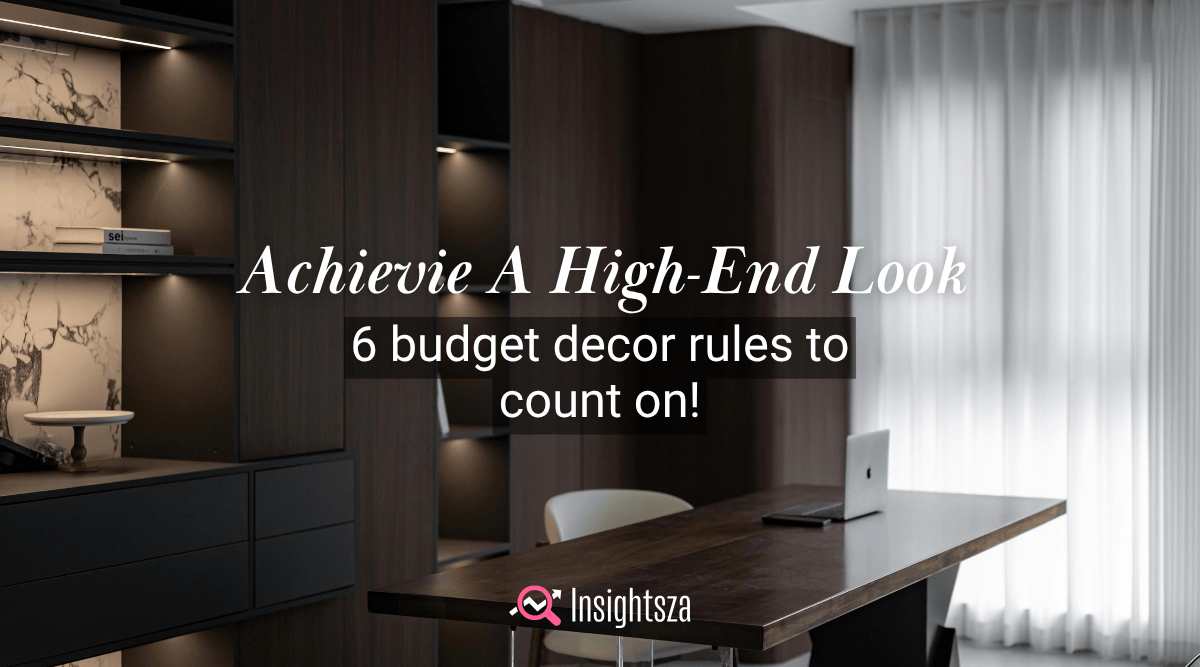
Here’s the uncomfortable truth, a $500 room can look more expensive than a $5,000 one. The difference isn’t money. It’s the decisions you make before you ever open your wallet.
According to a 2024 Houzz Renovation Trends Report, 85% of homeowners say their biggest decorating regret is buying too many small, cheap accessories instead of fewer, higher-impact pieces. That single mistake kills more rooms than a tight budget ever could.
This guide fixes that with 6 rules that professional interior designers actually use, built for people who don’t have a designer’s budget. So, let’s dig in answering how to decorate on a budget?
The Real Reason Budget Decor Looks Cheap
Before tips, you need a mindset shift. Cheap-looking spaces share three things:
- Too much clutter: small accessories everywhere signal indecision, not style
- Wrong finishes: high-gloss, faux-marble, and shiny plastics scream mass-produced
- No focal point: the eye doesn’t know where to look, so nothing stands out
Fix these three issues alone, and your room improves before you spend a single rupee or dollar more.
Rule 1: Always Choose Matte Over Glossy
This is the single most important rule in budget decorating and almost nobody talks about it.
Budget stores are flooded with high-gloss ceramics, shiny white surfaces, and lacquered finishes. They look mass-produced because they are. The moment you bring them home, they telegraph “discount store” to every visitor.
Matte finishes, on vases, trays, ceramics, and shelves, look organic, handmade, and inherently more expensive. They don’t reflect harsh light; they add texture, and they photograph beautifully. When shopping, always choose matte over gloss, even if the glossy option is cheaper.
Rule 2: Go Big on Scale, Not Quantity
Interior designers have a golden rule: one large piece beats ten small ones every time.
A large rug, an oversized mirror, or a floor-to-ceiling curtain panel makes a room feel designed and deliberate. Ten small accessories make a room feel like a gift shop. Studies in environmental psychology show that rooms with fewer, larger objects are consistently rated as more “luxurious” by viewers, even when the items cost less.
Quick Win: Can’t afford a large rug? Layer a $20 jute rug under a $30 vintage-style runner. The layered effect costs under $50 but looks like a $300 styled interior.
Rule 3: Hardware Is Everything
Here’s a designer secret most people overlook completely: the hardware on your furniture tells visitors everything about your taste.
Replacing factory-default cabinet knobs, drawer pulls, and door handles with matte black, aged brass, or leather strap options instantly transforms flat-pack furniture into something that looks intentional and custom.
A full kitchen hardware upgrade can cost under $40, but it changes how the entire room reads. This is one of the highest ROI upgrades in affordable home decorating.
Rule 4: Layer Your Lighting (Stop Using Just Overhead)
Harsh, single-source ceiling lighting is the fastest way to make any room feel flat, institutional, and cheap. Professional designers always work with three layers of light:
- Ambient: ceiling or overhead (the base layer)
- Task: desk lamp, reading light, kitchen under-cabinet strip
- Accent: candles, a warm floor lamp, LED strip behind a shelf or TV unit
You don’t need expensive fixtures. A $15 floor lamp in the corner of your living room paired with a $10 table lamp beside your sofa changes the entire atmosphere of the space, especially at night.
Rule 5: One Vintage or Thrifted Piece Per Room
This is what separates a styled space from a showroom floor display. A single vintage or thrifted piece adds story and character that no big-box store can replicate at any price.
It signals to visitors that your space was built with intention, not assembled in a single shopping cart. Facebook Marketplace, thrift stores, and estate sales are full of ceramic lamps, aged mirrors, and framed art that cost almost nothing but carry enormous visual weight.
Rule 6: Use Walls as Free Real Estate
Most homeowners leave their walls vastly underused. Walls are the biggest canvas in your home and they’re free to work with.
| Wall Upgrade | Cost | Effect |
|---|---|---|
| Deep-toned accent paint | $15–$30 | Dramatic depth and warmth |
| DIY MDF panel strips | $30–$60 | Textured, architectural look |
| Peel-and-stick wallpaper | $25–$50 | Pattern and personality |
| Gallery wall (framed personal photos) | $10–$25 | Curated, personal, shareable |
Pro Tip: Always frame your artwork with a white mount/mat board inside the frame. It adds perceived value and makes even a printed image look gallery-quality.
6 Budget Decorating Mistakes That Make Homes Look Cheap
Avoid these, they’re responsible for 90% of rooms that look unintentionally budget:
- Faux marble surfaces: always read as imitation; opt for raw timber or stone textures
- Matching everything too perfectly: identical furniture sets look sterile and staged
- Poly-fill throw cushions: swap inserts to feather/down; the plump, soft look is everything
- Unframed canvas prints: always, always frame your art
- High-gloss white melamine furniture: cold, flat, and immediately recognizable as cheap
- Overcrowded shelves: negative space is a design tool; less is always more expensive.
The Rule That Ties It All Together To Decorate on a Budget
Buy less. Choose better. Finish matters more than price.
Every room that looks expensive shares one quality: intentionality. The objects were chosen on purpose, placed with purpose, and nothing is there just to fill a gap. When you shop with this mindset, asking “does this add to the story of this room or just take up space?” your budget decorating decisions become sharper, smarter, and far more effective. Precisely, you’ll be able to decorate on a budget and give your space a pulse of your energy!
Your home should feel like you, not like a catalog page. Start with one rule from this guide this weekend and see how much changes with almost nothing spent.
FAQs
Q: How can I make my home look expensive on a very small budget?
Start with the three highest-impact upgrades: swap your cabinet hardware, layer your lighting, and bring in one large plant or vintage piece. These three changes cost under $100 combined but visually transform a space more than most $500 shopping hauls. Focus on finish (matte over gloss) and scale (bigger over more).
Q: What makes a home look cheap even with new furniture?
The most common culprits are glossy finishes, faux marble surfaces, harsh overhead lighting, and overcrowded shelves. New furniture doesn’t automatically mean good-looking, the finish, scale, and placement of pieces determine the final result far more than the price tag.
Q: Is it worth hiring an interior designer on a budget?
Not necessarily at the start. Many interior designers now offer one-hour paid consultations for $50–$150, far cheaper than a full service. Use that session to get a prioritized action list for your specific space. Alternatively, free tools like Houzz, Pinterest boards, and room-planning apps can help you visualize changes before you spend a dime.