
- Modern Living Spaces
Modern Living Spaces Ideas to Transform Your Home
Elevate your lifestyle with the latest trends in modern home design. From minimalist aesthetics to smart-home integration, discover innovative ideas to transform your house into a sleek, functional, and contemporary sanctuary.

There is that moment. You walk into someone else’s home and immediately feel something shift. The light, the textures, and the layout all just work. You go home, look around at the same furniture in the same corners, and think: I really need to transform my home.
Sound familiar? Good. This article is exactly for you.
Whether you are sitting on a real renovation budget or working in “creative with $500” territory, the right modern living spaces ideas can genuinely change how your home feels to live in. Not just for photos. For you, every single day.
Why Your Living Space Shapes More Than You Think
Your home is not just a backdrop to your life. It actively shapes your mood, your energy, and your stress levels. A cluttered, poorly lit, disconnected space creates constant low-grade friction that most people absorb without ever connecting it back to their environment. You are not just tired. Your home might be tired too.
Modernizing your living space is not about chasing trends or impressing visitors. It is about creating a home that reflects who you are right now and supports how you actually live. Not a staged property waiting to be sold. A space built for the person who actually wakes up there every morning.
The styles leading this shift in 2026 are warm minimalism, organic modern, and Japandi. All three share the same core philosophy: intentional, clutter-free living where every piece earns its place and the overall design aesthetic feels calm rather than loud.
Modern Living Spaces Ideas That Actually Deliver
Open-Concept Living
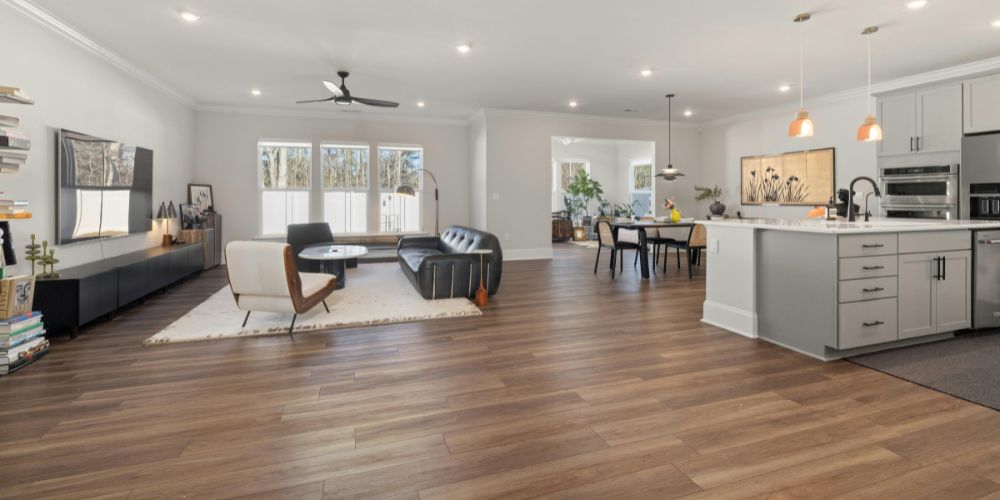
If your kitchen, dining room, and living area are still separated into isolated compartments, you are not living in a floor plan. You are living in a series of boxes. Removing non-load-bearing walls between these spaces is one of the highest-impact renovations per dollar, typically costing $1,200 to $5,000, depending on location and whether electrical or plumbing needs to be rerouted. The result is natural light, better space planning, and a home that feels significantly larger without adding a single square foot.
Biophilic Design
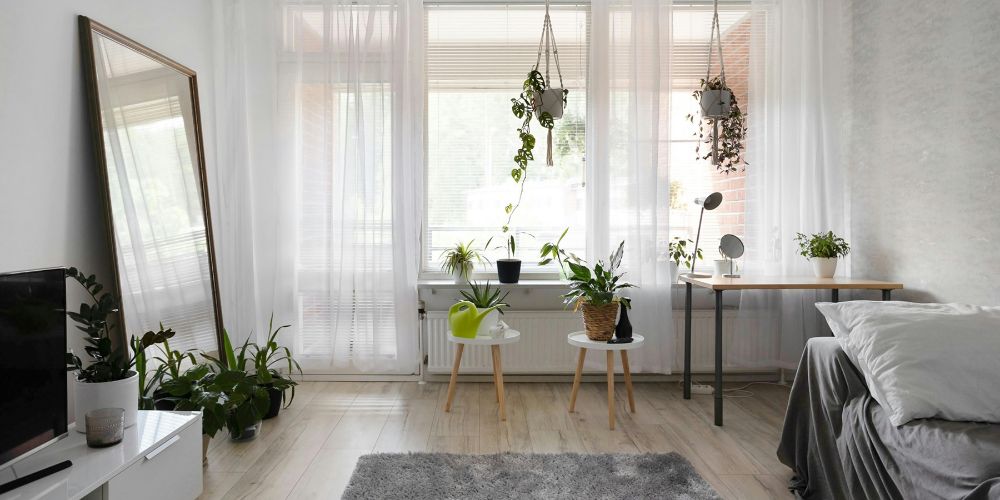
Biophilic design connects your living space to the natural world through materials, light, plants, and organic texture. This does not mean filling every corner with greenery. It means swapping synthetic materials for linen, jute, reclaimed wood, or travertine; maximizing natural light through sheer curtains or strategic mirror placement; choosing earthy palettes like terracotta, sage, and warm beige; and adding one or two statement indoor plants that actually do real design work. The emotional payoff is a home that feels genuinely calming rather than just aesthetically pleasing.
Statement Lighting
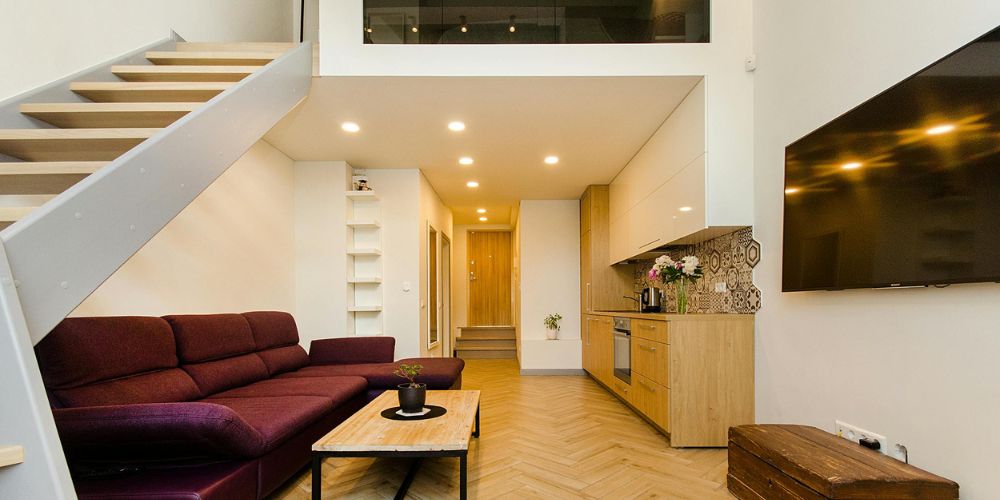
Ask any interior designer what the single most underestimated element of a living space is, and they will almost always say lighting. Not just the fixture you spent three hours picking out, but the full strategy: layered ambient, task, and accent lighting adjusted to different color temperatures based on time of day and mood. A dimmer switch costs $25. Swapping cool white bulbs for soft warm LEDs takes ten minutes. Adding a wall sconce on either side of a focal point runs under $200. The living room transformation that follows is wildly disproportionate to the cost.
Textured Walls and Intentional Color
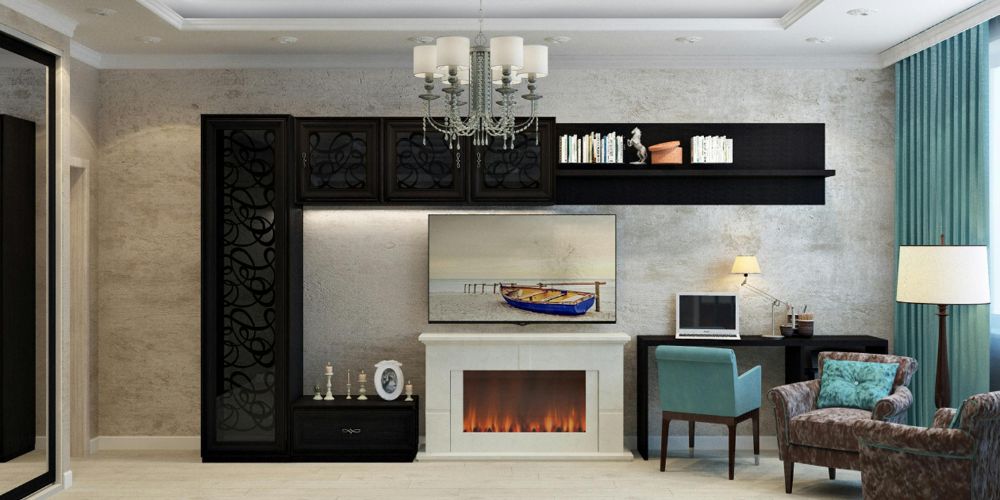
Builder-grade beige is the design equivalent of saying nothing. Confident color choices give your space real identity. Deep forest green on a feature wall, limewash paint on a fireplace surround, or slatted wood paneling across the living room all work. For the truly bold, color-drenching, where walls, trim, and ceiling are painted the same deep tone, is replacing greige and oatmeal as the most talked-about interior refresh of 2026. Sherwin-Williams and Benjamin Moore both offer curated palettes built around this approach, making it far easier to execute without guesswork.
Multifunctional Furniture
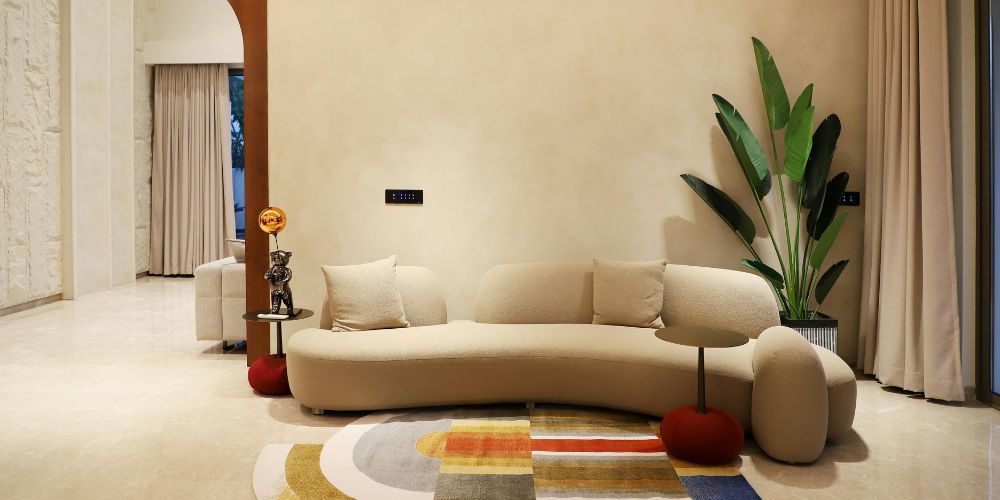
Bouclé fabric on a curved sculptural sofa is the single most recognizable signature of the organic modern aesthetic right now, and for good reason. It is soft, tactile, visually grounded, and immediately makes a room feel considered rather than assembled. Beyond the sofa, storage ottomans, fold-down wall desks, modular sectionals, and layered area rugs turn an underused living space into one that actually functions. The best modern home design in 2026 is not about the biggest rooms. It is about the most intentional ones.
Smart Home Integration
Smart home technology in 2026 is not about showing off. It is about making daily life meaningfully easier. A smart thermostat from Nest or Ecobee costs $150 to $300 installed, learns your schedule automatically, and trims energy costs by 10 to 15% annually. Voice-controlled lighting, smart locks, and motorized window shades are now accessible at price points that make them practical home improvements rather than luxury upgrades. When your home works intelligently around your routine, the quality-of-life shift is one you feel every single day.
What It Really Costs to Transform Your Home
Let’s talk numbers, because this is where most home remodeling ideas fall apart.
What is the 30% rule for home renovation?
The 30% rule says you should not spend more than 30% of your home’s current market value on renovations. If your home is worth $350,000, keep the total renovation spend under $105,000. Renovation costs do not always translate into increased property value dollar-for-dollar. Over-improving in a modest neighborhood rarely pays off at resale. That said, if this is your forever home with no near-term sale plans, your personal enjoyment has real value too, and the rule becomes a useful guideline rather than a hard cap.
What is the most expensive part of a house to remodel?
Kitchens. Consistently, across every market. A minor kitchen update runs $23,000 to $35,000. A midrange remodel hits $35,000 to $65,000. High-end overhauls can reach $100,000 or more. Cabinets, flooring, and countertops account for roughly 75% of kitchen remodel costs, with labor adding another 30-50%. Whole-home cosmetic renovations typically start around $50,000 to $90,000, while full gut renovations range from $150,000 to $300,000, depending on home size, age, and location.
Is $50,000 enough to renovate a home?
Yes, with the right priorities. Fifty thousand dollars can realistically cover a full kitchen renovation, two to three bathroom remodels, new flooring throughout, fresh paint, and upgraded lighting across shared spaces. Set aside 15 to 20% as a contingency fund before you start, lock in your priorities early, and resist scope creep mid-project. Renovation contractors also tend to offer better availability and pricing during off-peak months, typically late fall and winter, so timing matters more than most homeowners realize.
What Devalues a House and What to Avoid
Some home improvement ideas that feel like upgrades actually hurt your home’s value. The ones to watch:
- Removing a bedroom to create a larger master suite or home office reduces your buyer pool immediately, since buyers count bedrooms, and fewer bedrooms almost always means a lower sale price
- Over-personalizing your design aesthetic with ultra-specific color choices or niche themes that other people cannot picture themselves living in
- DIY work completed without permits, which raises red flags in every home inspection and can create legal complications at the point of sale
- Converting a garage into living space, since most US buyers want a functional garage and see the conversion as a loss rather than a gain
- Covering hardwood floors with carpet is both a design downgrade and a future renovation cost for the next owner.
The general principle: renovate to match or slightly exceed your neighborhood standard. Over-improving rarely recovers its cost.
Transform Your Home: Start Here
You do not need a six-figure budget or a complete gut renovation to transform your home in a way that genuinely changes your daily life. You need clarity on where to start, the confidence to make intentional choices, and a realistic plan that respects both your taste and your finances.
Start with one room. Fix what is broken first. Then focus on the spaces where you actually spend your time. Make one bold choice, whether that is a color, a light fixture, or a layout shift, and watch how it changes the feeling of the entire space. Real transformation builds from there.
Your home is where your actual life happens. It deserves to feel designed for the person living in it.
Frequently Asked Questions
How do I make my living room look modern on a budget?
To modernize your living room for $300 to $800, focus on these high-impact, low-cost updates:
- Lighting: Swap for warmer bulbs, add a dimmer, or invest in one statement floor lamp.
- Textiles: Mix textures with bouclé pillows or a chunky-knit throw blanket.
- Hardware: Replace dated knobs or pulls on media consoles and side tables.
- Paint: Apply a fresh coat of a warm neutral to add immediate depth.
Shopping at places like IKEA or West Elm allows you to achieve a high-end look without the designer price tag.
What home renovations have the best ROI?
To maximize your home’s resale value, focus on these high-ROI projects:
- Key Interiors: Minor kitchen and bathroom updates, plus refinishing hardwood floors.
- Efficiency: Adding attic insulation and replacing exterior doors.
- Curb Appeal: New landscaping and a fresh front door.
These improvements typically recover 60% to 80% of their cost, providing the best “bang for your buck” compared to major structural overhauls.
How do I make a small living space feel bigger?
Place one large mirror opposite a window to double perceived light and depth, use negative space intentionally by resisting the urge to fill every corner, and keep consistent flooring throughout connected spaces to eliminate visual weight between rooms.
What adds the most value to a home?
Kitchen and bathroom renovations consistently top the list, followed by energy efficiency upgrades like smart thermostats and new windows, hardwood floor refinishing, and adding usable square footage through finished basements or indoor-outdoor living extensions.
How long does a home renovation take?
A single-room cosmetic refresh typically takes one to three weeks. A midrange kitchen or bathroom remodel takes 4 to 8 weeks. Whole-home renovations can take 3 to 12 months, depending on the scope, permit timelines, and contractor availability. Always build buffer time into your plan.
What is the first thing to do when renovating a house?
Always start with a full condition assessment. Address structural and mechanical issues first (roof, HVAC, plumbing, electrical), then focus on high-ROI spaces like kitchens and bathrooms, and finish with cosmetic upgrades across shared living areas. Establish your budget with a general contractor before you fall in love with any specific finish or home decor direction.
Browse more in the Modern Living Spaces category at Insightsza for room-by-room renovation guides, real cost breakdowns, and design inspiration that goes well beyond the mood board.