
- Modern Living Spaces
Japandi Design Explained: Why This Minimalist Style Is Taking Over in 2026
Part Japanese wabi-sabi, part Scandinavian hygge: Japandi is the design movement turning ordinary rooms into calm, intentional sanctuaries. Here's everything you need to know (and shop).
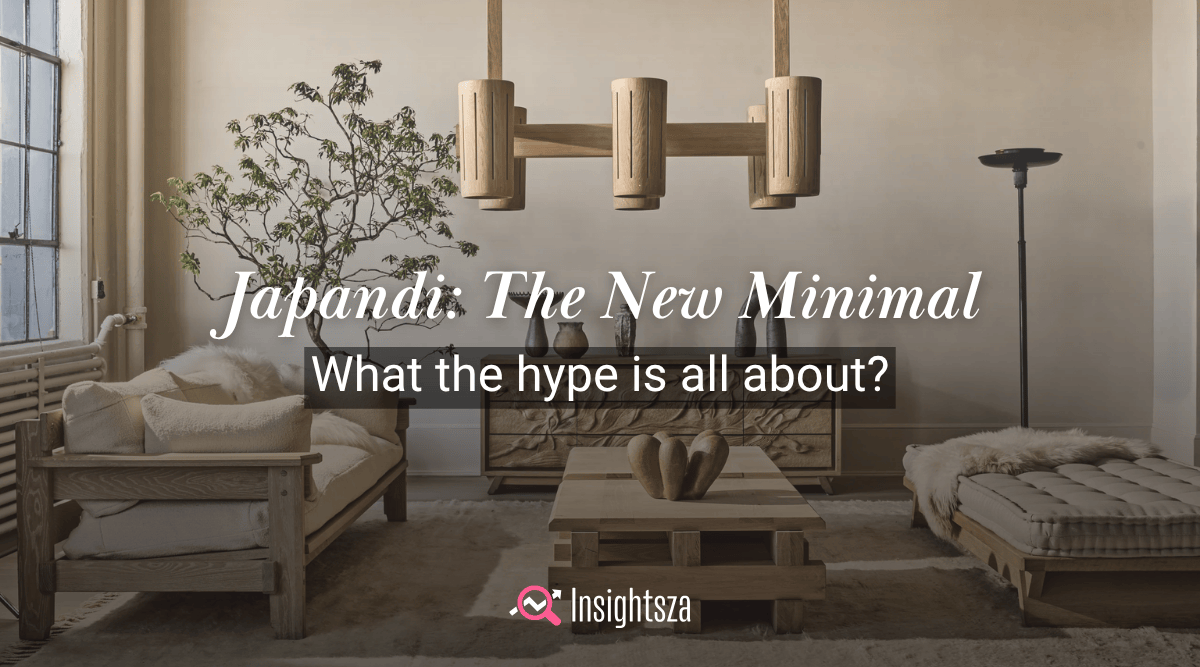
Japandi design searches climbed 105% in 2025–2026, Pinterest saw a 135% spike in “Japanese living room” queries, and TikTok’s #japandi tag is growing across every major market. These aren’t vanity metrics; they reflect a cultural shift.
People aren’t just redecorating. They’re reclaiming their space from visual noise, synthetic clutter, and trend fatigue. Japandi design offers something most modern interiors don’t: a room that feels as good as it looks.
So, What Exactly Is Japandi Design?
Japandi is a hybrid interior design style that fuses Japanese minimalism with Scandinavian functionality, the name itself is a portmanteau of Japan + Scandi.
It emerged organically as designers noticed that two geographically distant cultures shared remarkably similar values: restraint, craftsmanship, natural materials, and the belief that less, done well, is always more.
But Japandi is not cold or clinical. It’s warm minimalism, spaces that breathe, calm, and quietly invite you to stay. Think muted earthy tones, honest wood grain, handcrafted ceramics, and intentional silence between objects.
Japandi vs. Other Minimalist Styles
| Style | Mood | Color Palette | Key Material | Personality |
|---|---|---|---|---|
| Japandi | Warm + Meditative | Earthy neutrals, sage, taupe | Oak, linen, ceramics | Soulful restraint |
| Scandinavian | Bright + Functional | Cool whites, light grays | Birch, wool, glass | Democratic coziness |
| Japanese Minimalism | Spare + Spiritual | Whites, black, stone | Bamboo, paper, stone | Philosophical emptiness |
| Wabi-Sabi | Rustic + Imperfect | Warm browns, weathered tones | Aged wood, clay | Beauty in impermanence |
| Modern Minimalism | Clean + Sleek | Cool whites, chrome | Steel, glass, concrete | Architectural precision |
The Two Philosophies That Power Japandi
Understanding Japandi requires understanding the two worldviews it blends, and why they work so powerfully together.
Wabi-Sabi (Japan 🇯🇵)
Rooted in 16th-century tea ceremony culture, wabi-sabi finds beauty in imperfection, impermanence, and incompleteness. A ceramic bowl with an uneven rim. A wooden shelf worn at the edges. These aren’t flaws — they’re the soul of the object.
Hygge (Scandinavia 🇩🇰🇸🇪)
Denmark’s defining cultural concept, hygge (pronounced hoo-ga) is the art of cozy contentment soft lighting, warm textures, and spaces that feel genuinely human. It turns minimalism from a design rule into an emotional experience.
Where wabi-sabi embraces the void, hygge warmly inhabits it. That tension is exactly where Japandi lives and why it resonates so universally.
Why 2026 Is Japandi’s Defining Year
Japandi isn’t peaking, it’s maturing. Design experts now distinguish between early Japandi (2019–2022), which was formula-driven and trend-chasing, and 2026 Japandi, described as “atmospheric minimalism,” spaces prioritizing emotional resonance over rigid aesthetic rules.
Here’s what’s changed in 2026:
- Palette shift: Cool grays are out. Earthy terracotta, muted greens, dusty taupe, and warm wood tones are in
- Textural layering: Rough linen, hand-thrown ceramics, untreated woods — sensory depth replacing flat surfaces
- Sustainability as a foundation: Materials with traceable origins, designs built to outlast five trend cycles
- Celebrated imperfection: Visible throwing lines on pottery, gentle tool marks on wood, authenticity over perfection
Yelp’s 2026 Design Forecast confirmed that biophilic design queries rose 124% and fluted panel searches surged 459% both core to modern Japandi expression.
The 5 Non-Negotiable Elements of a Japandi Interior
Master these five pillars and any room can be transformed.
- Natural, Honest Materials
Light wood species oak, ash, birch form the structural backbone. Stone, bamboo, jute, and cotton reinforce the nature connection. Nothing synthetic that pretends to be something it isn’t. - A Muted, Earthy Palette
Build from warm white or off-beige. Layer in sage green, warm taupe, or soft terracotta. Avoid cool whites and gray-dominated palettes those belong to a different era of minimalism. - Low-Profile, Functional Furniture
Platform beds, floor-level seating, clean-lined wooden tables. Every piece earns its placement by serving a purpose nothing decorative for decoration’s sake alone. - Negative Space (Ma)
Borrowed from Japanese spatial philosophy, ma is the intentional use of empty space. Silence between objects gives meaning to what’s present. Don’t fill every corner. - One Curated Handcrafted Object Per Surface
A single ceramic vase. A woven throw. One sculptural plant. Quality over quantity, always. This is where the room exhales.
Brands Leading the Japandi Movement in 2026
| Brand | Origin | Why It Matters |
|---|---|---|
| Muuto | Denmark 🇩🇰 | Tactile minimalism — furniture that feels essential and human |
| Ferm Living | Denmark 🇩🇰 | Natural textures + sculptural objects bridging function and art |
| Karimoku Case Study | Japan + Scandinavia 🇯🇵🇸🇪 | The definitive cross-cultural furniture collaboration |
| HAY | Denmark 🇩🇰 | Accessible Japandi-adjacent pieces with strong craft sensibility |
| Artek | Finland 🇫🇮 | Timeless birch furniture — Japandi before the name existed |
How to Achieve Japandi in Any Home (Any Budget)
You don’t need to hire an interior designer or start from scratch. Japandi is fundamentally about subtracting before adding.
Start here, in this exact order:
- Declutter ruthlessly, remove anything that doesn’t function or carry personal meaning. Japandi cannot coexist with visual noise.
- Replace one synthetic material with a natural alternative: a linen throw instead of polyester, a wooden tray instead of plastic
- Lower your lighting: warm-toned Edison or paper lantern fixtures over harsh ceiling lights
- Introduce one living element, a single potted plant or a small moss arrangement for biophilic grounding
- Leave one surface intentionally empty, resist the urge to fill it. That space is the design.
Japandi for Small Spaces: Does It Work?
Absolutely, and arguably, it works better in smaller homes.
Japandi’s philosophy of ma (intentional negative space) is practically engineered for compact living. Low-profile furniture visually expands rooms. A limited, consistent palette eliminates the fragmented feeling that makes small spaces feel chaotic.
In a studio or 2-bedroom apartment, three Japandi principles alone decluttering, consistent warm neutrals, and one natural material per room — can transform how a space feels within a weekend and zero renovation budget.
Your Home Deserves to Feel Like a Exhale
We live in an era of relentless stimulation, endless feeds, cluttered inboxes, and rooms that somehow manage to feel full yet empty at the same time. Japandi design doesn’t just solve an aesthetic problem. It solves a human one.
By borrowing wabi-sabi’s quiet acceptance of imperfection and hygge’s generous warmth, Japandi creates spaces that actively work for you — lowering your cortisol, sharpening your focus, and making home feel like the retreat it was always supposed to be.
And the best part? You don’t need a complete overhaul or a designer’s budget. You need one less object on the shelf, one natural material replacing a synthetic one, and one surface left intentionally, peacefully empty.
FAQs
Is Japandi design still relevant in 2026, or is it fading out?
Japandi is not fading, it’s evolving. Unlike trend-driven aesthetics, Japandi is anchored in philosophy (wabi-sabi and hygge), which means it doesn’t expire. Search data confirms accelerating interest, with queries up 105% in Yelp’s 2026 Design Forecast. The style has shifted from strict formulas to more personal, warmer interpretations — which actually makes it more accessible and enduring heading into 2027.
What’s the difference between Japandi and regular minimalism?
Standard minimalism can feel cold, punishing, and impersonal — emptiness for its own sake. Japandi adds warmth through natural textures, handcrafted imperfections, and earthy tones guided by wabi-sabi and hygge. The emptiness in Japandi is purposeful, not austere. It’s the difference between a room that’s been stripped and one that’s been thoughtfully edited.
What colors are used in Japandi interior design?
The 2026 Japandi palette centers on warm off-whites, wood tones, sage green, dusty taupe, and muted terracotta. Cool grays and stark whites are consciously avoided — they belong to earlier minimalist eras. A practical rule: if the color could be found in a forest floor, a sand dune, or unbleached linen, it belongs in a Japandi interior.